The $100B “Stargate” Supercomputer: Microsoft and OpenAI’s High-Stakes AI Power Play
 Written by
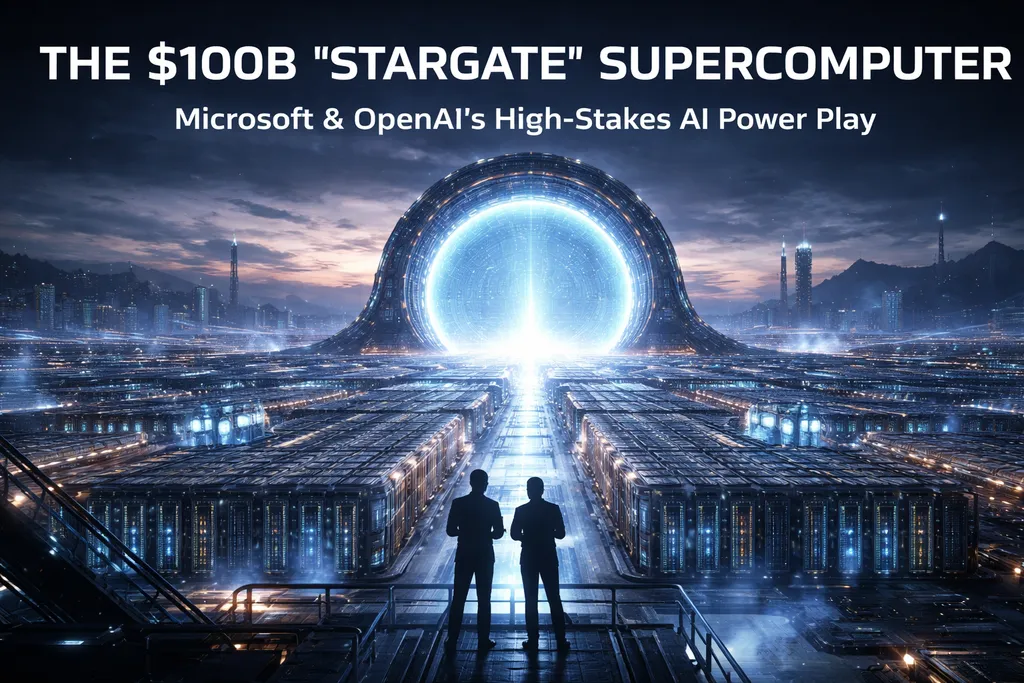
Microsoft and OpenAI are reportedly planning an enormous supercomputer project codenamed “Stargate,” a futuristic AI data center initiative that could cost as much as $100 billion and launch as early as 2028. The goal is simple in theory but staggering in execution: build the kind of computing infrastructure required to push artificial intelligence toward artificial general intelligence (AGI)—systems with human-like reasoning abilities.
The project would be the final stage of a five-phase infrastructure roadmap, designed to scale far beyond today’s most advanced AI training environments. Stargate is expected to rely on millions of specialized AI accelerator chips, networked together into a single massive system capable of training models far larger and more sophisticated than current ones.
But Stargate’s size creates immense challenges. One of the biggest is energy demand. The supercomputer could require several gigawatts of power, with some estimates reaching around five gigawatts by 2030—enough electricity to rival multiple nuclear plants and put major strain on regional grids.
Because of this, Microsoft and OpenAI are reportedly considering unconventional energy solutions, including nuclear fusion. This ties into OpenAI CEO Sam Altman’s investment interest in fusion startup Helion, and Microsoft’s existing agreement to buy energy from Helion’s planned fusion plant, targeted for 2028—a timeline that aligns closely with Stargate.
Another major hurdle is chip sourcing. Nvidia currently dominates AI compute hardware, but Stargate’s sheer demand makes reliance on a single supplier risky. The project may use a more diversified strategy involving vendors like AMD and Microsoft’s own Maia AI accelerator chips, potentially reshaping competitive dynamics in the AI hardware industry.
Ultimately, Stargate represents a massive strategic bet: that building unprecedented compute capacity will keep Microsoft and OpenAI ahead of rivals like Google and Meta—and accelerate the race toward AGI
The project would be the final stage of a five-phase infrastructure roadmap, designed to scale far beyond today’s most advanced AI training environments. Stargate is expected to rely on millions of specialized AI accelerator chips, networked together into a single massive system capable of training models far larger and more sophisticated than current ones.
But Stargate’s size creates immense challenges. One of the biggest is energy demand. The supercomputer could require several gigawatts of power, with some estimates reaching around five gigawatts by 2030—enough electricity to rival multiple nuclear plants and put major strain on regional grids.
Because of this, Microsoft and OpenAI are reportedly considering unconventional energy solutions, including nuclear fusion. This ties into OpenAI CEO Sam Altman’s investment interest in fusion startup Helion, and Microsoft’s existing agreement to buy energy from Helion’s planned fusion plant, targeted for 2028—a timeline that aligns closely with Stargate.
Another major hurdle is chip sourcing. Nvidia currently dominates AI compute hardware, but Stargate’s sheer demand makes reliance on a single supplier risky. The project may use a more diversified strategy involving vendors like AMD and Microsoft’s own Maia AI accelerator chips, potentially reshaping competitive dynamics in the AI hardware industry.
Ultimately, Stargate represents a massive strategic bet: that building unprecedented compute capacity will keep Microsoft and OpenAI ahead of rivals like Google and Meta—and accelerate the race toward AGI
Comments
No comments yet. Be the first to comment!
Leave a Comment